The Forces of Physics Playground
(Emily Katharine Dale, Saira Mallick,
At the “Forces of Physics” Playground, the force is literally with you! Using simple, interactive machines, kids discover scientific phenomena, or forces. Integrated technology allows kids to visualize their activity and movement, interact with that data in a central kiosk, and continue the discovery process in a supplementary application. 
Playground movement generates imagery and data, which feeds into an application, where further learning takes place. Signage adjacent to each machine will explain the particular force at work, and will include a QR Code, which can be scanned with a smart phone/tablet to display an animation showing the force in action.
While we intend for the playground to demonstrate multiple forces, the forces we will focus on in this document are : Spring Force, Applied Force, Magnetic Force, and Centrifugal.
THE MACHINES
Applied Force
The track around the playground is the first thing the children see when they intend to enter the Forces of Physics Playground. Since it is visible from all the activities on the ground, students can watch friends play with the track, whilst playing with other equipment. 


See and do: The track will teach the students about applied force, which is applied to an object by a person or another object (Applied force = mass* acceleration). The goal of the activity is to choose a box (they will have a choice of different sizes and weights) to move on the track from point A to point B as fast as they can. The heavier it is the more likely they will need a friend to help them. The track has a series of obstacles like inclines, turns, clock wheels etc. that make it challenging for them to get through it.
Sensors along the track will record the mass, time and speed of the activity and send the data to the kiosk for the students to see.
See and learn: Through the kiosk in the middle of the playground they will be able to see their time and calculated average force they applied through the whole track.
Spring Force
See and do: A series of catapults made of elastic and springs with varying elasticity will be set up in a line. The goal of the activity is to hit targets at different distances on a net using the catapults by propelling balls of different weights and sizes. The targets will light up and play music when hit.
The players will be able to see how much they are stretching the elastic or compressing the spring, and how far the ball has been propelled, through markers on the ground.

See and learn: The students will observe the compression and extension of the spring/elastic catapults. They will discover different principles involved in spring force, such as the thinner the elastic, the greater the stretch, and that the more force is applied, the greater the propelling action. The sensors in the catapults will calculate the force applied, the extent of stretch and compression, the distance covered by the balls, and the number of hits and misses. This data will be displayed on the kiosk for the students to see.
Magnetic Force
See and do: The “magnetic forces seesaw” will appear like an ordinary seesaw, but below the seats reside magnets. On the ground there are additional freestanding magnets, in the form of 2-sided discs, + and -, which can be flipped around and moved from side to side by the kids, below the seats of each side of the seesaw. Depending on which magnet/side the kids have placed under each seat, the seesaw riders will be pulled downward or pushed upward (the strengths of the charges will be customized to avoid projecting riders too quickly into the air, or pulling them down too abruptly). On the magnetic seesaw, kids discover the magnetic force in a fun, safe and interactive way.

See and learn: By experimenting with different combinations of the magnets, students discover that: 1) magnetic fields by themselves are invisible to the human eye, 2) magnetism can attract magnetic objects or push them away, 3) magnetic objects must be inside the magnetic field to respond, which is why you may have to move a magnet closer for it to have an effect.
See and learn: Cameras embedded at the kiosk capture and display video of the kids interactions, overlaying playful info graphics (augmented reality) which illuminate what is happening. Video ould also be captured and pumped into the app for further review, amusement and learning.
Centrifugal Force
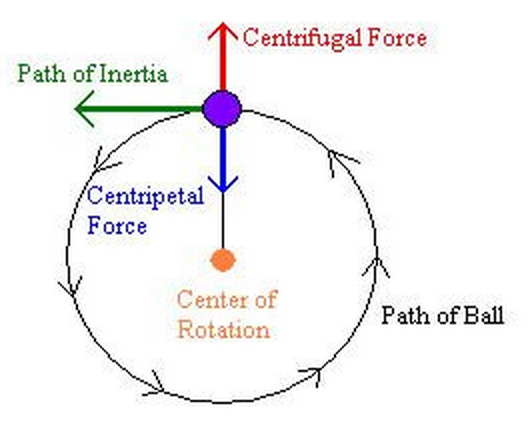
Centrifugal force is one of the most important forces on earth. From galaxies to atoms many systems have such a concept, which is, in physically, not real but supposed to be present for the objects that turn around a center. From the basic concept of Newton’s equilibrium condition: if an object turn around a circle with a linear speed of V, the centrifugal force is given;
F= mV2/r where, m and r are the mass of object and the radius of circle, respectively.
See and learn: Students will be seeing the real world examples of Centrifugal force on the screen. There are going to be both video and animations. The video is just to show the example and animation is to explain the steps and how things happens. For example, we can make Centrifugal Force visual with a small ball and a piece of rope. If we fasten the ball at the end of the rope and make it turn around the center ( which can be our hand), it will follow a circle path around our hand. Because of the kinetic energy that the rotating ball has, there will be tensile force (T) on the rope that keeps the ball on the circle. Physically, there must be another force that does not allow the ball goes to the center. From the Newtons’ equation, if the ball keeps follow the same circle, this force must be equal to the T. This force, as it given above, dependent on the speed of object, high speed means that high centrifugal force. It is easy to see that if the ball is turned around the circle there will be a bigger T on the rope. In order to see centrifugal force, we can cut the rope or relinquish it after let it turn by holding the empty side/point. It will go away from its path toward the outside of circle, a kind of exclusion. This movement is result of centrifugal force.
In nature, there are many different source of centrifugal forces. For example, our earth turns around the sun more than 1000km per hour. To keep our world on its path, the force must be equal to the mass attraction force between the sun and earth. This force can also be equal to the frictional force for the cars while going on bend. If you enter the curve faster, probably, your car will be driven away. That is why the engineers built the curves with a small slope to reduce the centrifugal force.
See and do: After students see the real world examples videos such as cars, earth and ball and rope examples. He will have the materials where he can design the same environment and learn it by doing. For example, There will be a rope and ball and a student can make the same experiment by herself and see the result and explain it. After a student make the experiment, s/he can share it on the application.
DIGITAL KIOSK (See and learn)
A digital kiosk with multiple touchscreens will be located in the center of the playground, accessible and visible from all sides. It will contain a short animated video explanation of the respective force/law with real life examples (which can be viewed both before and after the activity) and data from the activity after it has been completed. Players will be able to transfer their data to the online app.

ONLINE APPLICATION (See, do and learn)
Students can go online to learn more about the forces introduced through the equipment on the playground. Each force will have it’s own section in the app where you can watch a video clip that explains the force, equations and mathematical examples where the forced is used as well a general definition of the scientific term. The phone application is intended to be used by older students that are starting to learn physics.
The learning will be supplemented by classroom activities and worksheets for teachers/students based on the concepts they learn in the playground and the online videos. There will also be virtual versions of the playground activities for the younger kids.
Mood Board


No comments:
Post a Comment