Tuesday, December 17, 2013

The Forces of Physics Playground


The Forces of Physics Playground
(Emily Katharine DaleSaira Mallick,
                                     Hildur Rudolfsdottir & Aybuke Turker)


At the “Forces of Physics” Playground, the force is literally with you! Using simple, interactive machines, kids discover scientific phenomena, or forces. Integrated technology allows kids to visualize their activity and movement, interact with that data in a central kiosk, and continue the discovery process in a supplementary application.

Playground movement generates imagery and data, which feeds into an application, where further learning takes place. Signage adjacent to each machine will explain the particular force at work, and will include a QR Code, which can be scanned with a smart phone/tablet to display an animation showing the force in action.

While we intend for the playground to demonstrate multiple forces, the  forces we will focus on in this document are : Spring Force, Applied Force, Magnetic Force, and Centrifugal.


THE MACHINES

Applied Force
The track around the playground is the first thing the children see when they intend to enter the Forces of Physics Playground. Since it is visible from all the activities on the ground, students can watch friends play with the track, whilst playing with other equipment.


See and do: The track will teach the students about applied force, which is applied to an object by a person or another object (Applied force = mass* acceleration). The goal of the activity is to choose a box (they will have a choice of different sizes and weights) to move on the track from point A to point B as fast as they can. The heavier it is the more likely they will need a friend to help them. The track has a series of obstacles like inclines, turns, clock wheels etc. that make it challenging for them to get through it.

Sensors along the track will record the mass, time and speed of the activity and send the data to the kiosk for the students to see.

See and learn: Through the kiosk in the middle of the playground they will be able to see their time and calculated average force they applied through the whole track.


Spring Force
See and do: A series of catapults made of elastic and springs with varying elasticity will be set up in a line. The goal of the activity is to hit targets at different distances on a net using the catapults by propelling balls of different weights and sizes. The targets will light up and play music when hit.

The players will be able to see how much they are stretching the elastic or compressing the spring, and how far the ball has been propelled, through markers on the ground.


See and learn: The students will observe the compression and extension of the spring/elastic catapults. They will discover different principles involved in spring force, such as the thinner the elastic, the greater the stretch, and that the more force is applied, the greater the propelling action. The sensors in the catapults will calculate the force applied, the extent of stretch and compression, the distance covered by the balls, and the number of hits and misses. This data will be displayed on the kiosk for the students to see.


Magnetic Force
See and do: The “magnetic forces seesaw” will appear like an ordinary seesaw, but below the seats reside magnets. On the ground there are additional freestanding magnets, in the form of 2-sided discs, + and -, which can be flipped around and moved from side to side by the kids, below the seats of each side of the seesaw. Depending on which magnet/side the kids have placed under each seat, the seesaw riders will be pulled downward or pushed upward (the strengths of the charges will be customized to avoid projecting riders too quickly into the air, or pulling them down too abruptly). On the magnetic seesaw, kids discover the magnetic force in a fun, safe and interactive way.

  
See and learn: By experimenting with different combinations of the magnets, students discover that: 1) magnetic fields by themselves are invisible to the human eye, 2) magnetism can attract magnetic objects or push them away, 3) magnetic objects must be inside the magnetic field to respond, which is why you may have to move a magnet closer for it to have an effect.

See and learn: Cameras embedded at the kiosk capture and display video of the kids interactions, overlaying playful info graphics (augmented reality) which illuminate what is happening. Video ould also be captured and pumped into the app for further review, amusement and learning.


Centrifugal Force
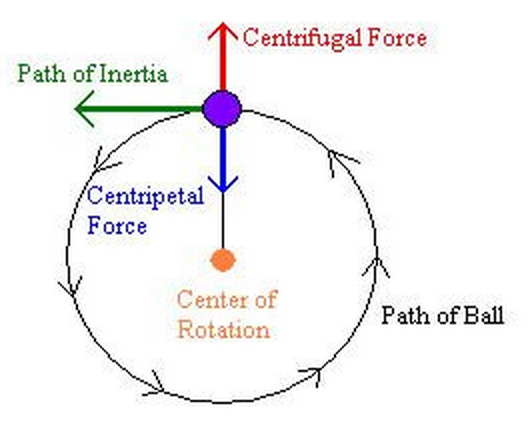
Centrifugal force is one of the most important forces on earth. From galaxies to atoms many systems have such a concept, which is, in physically, not real but supposed to be present for the objects that turn around a center. From the basic concept of Newton’s equilibrium condition: if an object turn around a circle with a linear speed of V, the centrifugal force is given;
F= mV2/r  where, m and r are the mass of object and the radius of circle, respectively.

See and learn: Students will be seeing the real world examples of Centrifugal force on the screen. There are going to be both video and animations. The video is just to show the example and animation is to explain the steps and how things happens. For example, we can make Centrifugal Force visual with a small ball and a piece of rope. If we fasten the ball at the end of the rope and make it turn around the center ( which can be our hand), it will follow a circle path around our hand. Because of the kinetic energy that the rotating ball has, there will be tensile force (T) on the rope that keeps the ball on the circle. Physically, there must be another force that does not allow the ball goes to the center. From the Newtons’ equation, if the ball keeps follow the same circle, this force must be equal to the T. This force, as it given above, dependent on the speed of object, high speed means that high centrifugal force. It is easy to see that if the ball is turned around the circle there will be a bigger T on the rope. In order to see centrifugal force, we can cut the rope or relinquish it after let it turn by holding the empty side/point. It will go away from its path toward the outside of circle, a kind of exclusion. This movement is result of centrifugal force.

In nature, there are many different source of centrifugal forces. For example, our earth turns around the sun  more than 1000km per hour. To keep our world on its path, the force must be equal to the mass attraction force between the sun and earth. This force can also be equal to the frictional force for the cars while going on bend. If you enter the curve faster, probably, your car will be driven away. That is why the engineers built the curves with a small slope to reduce the centrifugal force.

See and do: After students see the real world examples videos such as cars, earth and ball and rope examples. He will have the materials where he can design the same environment and learn it by doing. For example, There will be a rope and ball and a student can make the same experiment by herself and see the result and explain it. After a student make the experiment, s/he can share it on the application.


DIGITAL KIOSK (See and learn)

A digital kiosk with multiple touchscreens will be located in the center of the playground, accessible and visible from all sides. It will contain a short animated video explanation of the respective force/law with real life examples (which can be viewed both before and after the activity) and data from the activity after it has been completed. Players will be able to transfer their data to the online app.


ONLINE APPLICATION (See, do and learn)
Students can go online to learn more about the forces introduced through the equipment on the playground. Each force will have it’s own section in the app where you can watch a video clip that explains the force, equations and mathematical examples where the forced is used as well a general definition of the scientific term. The phone application is intended to be used by older students that are starting to learn physics.

The learning will be supplemented by classroom activities and worksheets for teachers/students based on the concepts they learn in the playground and the online videos. There will also be virtual versions of the playground activities for the younger kids.


Mood Board

Tuesday, December 10, 2013

Centrifugal Force


Centrifugal Force

Centrifugal force is one of the most imfortant forces on earth. From glaxies to atoms many systems have such a concept, which is, in physically, not real but supposed to be present for the objects that turn around a center. From the basic concept of Newton’s equilibrium condition: if an object turn around a circle with a linear speed of V, the centrifugal force is given;
F= mV2/r  where, m and r are the mass of object and the radius of circle, respectively.

See and Learn ( Kiosk):
Students will be seeing the real world examples of Centrifugal force on the screen. There are going to be both video and animations. The video is just to show the example and animation is to explain the steps and how things happens. For example, we can make Centrifugal Force visual with a small ball and a piece of rope. If we fasten the ball at the end of the rope and make it turn around the center ( which can be our hand), it will follow a circle path around our hand. Because of the kinetic energy that the rotating ball has, there will be tensile force (T) on the rope that keeps the ball on the circle. Physically, there must be another force that does not allow the ball goes to the center. From the Newtons’ equation, if the ball keeps follow the same circle, this force must be equal to the T. This force, as it given above, dependent on the speed of object, high speed means that high centrifugal force. It is easy to see that if the ball is turned around the circle there will be a bigger T on the rope. In order to see centrifugal force, we can cut the rope or relinquish it after let it turn by holding the empty side/point. It will go away from its path toward the outside of circle, a kind of exclusion. This movement is result of centrifugal force.

In nature, there are many different source of centrifugal forces. For example, our earth turns around the sun  more than 1000km per hour. To keep our world on its path, the force must be equal to the mass attraction force between the sun and earth. This force can also be equal to the frictional force for the cars while going on bend. If you enter the curve faster, probably, your car will be driven away. That is why the engineers built the curves with a small slope to reduce the centrifugal force.

See and Do:
After students see the real world examples videos such as cars, earth and ball and rope examples. He will have the materials where he can design the same environment and learn it by doing. For example, There will be a rope and ball and a student can make the same experiment by herself and see the result and explain it. After a student make the experiment, s/he can share it on the application.

Tuesday, December 3, 2013

Children’s Book - Monkey


Children’s Book - Monkey
(Group Ideas)

1. Link animals words with different pictures of animals (tails, head, etc.)
2. Find the monkey (like Find Waldo) in the picture
3. What does this animal eat? Link animals with different food items
4. Link animals with different habitats - where does this animal live?


1. VOCABULARY MAZE
Words from the scenes are displayed one by one. Players click on pictures of objects to find their way through the maze to reach the monkey.
2. SPELLING QUIZ
Objects from the scenes are displayed one by one. Players use jumbled letters to spell the names of all the objects correctly to find the monkey.
3. JIGSAW PUZZLE
Players put together jigsaw puzzles of the scenes, until they find the monkey.

Monday, November 11, 2013

Tuesday, October 22, 2013

World Science Festival Website!


GOALS AND INTENT OF WSF

  • Promote and sustain knowledge and appreciation of science
  • Improve public perception of science
  • Inspire students to pursue science and science careers
  • Articulate the wonder and drama of science, often absent in the classroom
  • Shift science from the cultural outskirts to the cultural center

AUDIENCE

The audience is the general public but we will have content tailored to specific groups within this wider audience. These groups include:

  • Children (age 5-18) and their parents
  • Educators (teachers, school heads)
  • Scientists interested in presenting at the festival
  • Underrepresented communities

GENERAL DESCRIPTION

Our WSF website will highlight the importance of Festival as an event. All further features of the website will flow from this central goal. For example, the homepage will include a countdown timer, and the main navigation bar will emphasize attendance, participation, lineup, etc.

Key Ideas:  

  • Make the website welcoming, engaging and user friendly while maintaining the integrity of the tone of originally established by WSF.
  • Take into consideration different reasons for visiting the site and mold the site to work with those motives
  • Provide information/sections for different user archetypes
  • “one picture is worth a thousand words” type picture or video on the homepage
  • Gear content toward the general public
  • Make the subscribe button more prominent and provide incentive for subscription


  • Highlight the momentous scale of the WSF event on the homepage

  • Countdown timer until various festivals
  • Clear navigation directed toward attendance of the festival
  • Feature videos, photos and audience feedback from past events
  • Festival line-up and descriptions of events/activities

  • Create an App for festival goers to use before, during, and after the festival

  • Provide updates, countdown timer, logistics assistance for attendees
  • Allow users to schedule their movement through the festival
  • Feature events, vendors, and exhibits beyond just speaker lineup
  • Allow users to post their pictures and videos during and after the event
  • Provide alerts and check-in functionality
  • Gamification for activity completion under different scientific domains
  • Minorities in science section including bios as well as highlighting presence at the festival


Team: Claire, Saira, Sam $ Aybuke 

Tuesday, October 1, 2013

The 55 Word Story


She said YES
After sharing 10 great years together, he asked her if she wants to have 4 more siblings, one more dad and mom, having the same key, sharing the same name, making him the happiest guy and hopefully luckiest dad in the world.
And She said “Yes” witnessed by the full moon in the night sky.

Monday, September 30, 2013

Prototyping, Testing and Development


Chapter 8: Prototyping, Testing and Development

Interface design is the experienced representation of the interaction design, not the interaction design itself. The interface is what people see, hear or feel. ( iceberg example where the part that can be seen is the interface, what is below surface what is not seen is  where the main part of interaction design lies: the design decisions, the technical underpinning. Interface design is where the invisible functionality of a product is made visible.

  • the placement of controls and navigation.
  • on screen colors, font, lines, boxes
  • positioning and alignment of objects
  • do the squint test

Prototyping: it is where all the pieces of the design come together in a holistic unit. “This is what it could be like”. Creating a clearer vision among the team. Choose the 5-6 most important concept of the design to prototype.

Testing: It is testing the product or service with users. Designers should not be defensive about their design. Most experienced designers know you seldom get it right the first time.

Development: Actual development for physical objects and manufacturing. Designers should get involve with this development process.

Note: End of the design document is seldom the end.

Tuesday, September 24, 2013

Interface Observation and Analysis

Interface Observation and Analysis

My very first critic is about my house door which I have to open everyday.  When I want to open my door, my natural intention is turning the handle and the key to the left. However, I have to turn the key to the right as if I were locking the door. Even though I know the fact that how it opens, it always confuse me.

My second critic is about kitchen appliance. The picture you see below is a "Kitchen Robot" which is supposed to help pretty much anything in the kitchen. You buy it, they send a giant box to your house. You open it and after a while you decide not to use most of the parts because you cannot get how they work. There is not any mapping on the pieces. I am sure machine itself is functional; however, you do not know how to take advantage of all those pieces. It is very poor defined interface. They want the magic happen without giving any information. Nobody is going to buy this and sit and read every single time before they use. At least my mom did not do so and we ended up using the ones we could figure out and the rest stays on the box for almost 10 years. 
They should have a clear map. They could have some icons on the pieces to let user what they are for. Instead of making "how to use book" like a text book, they could make it less word more picture and maybe colorful. 
My third  critic is a mystery, I will just share the picture and let people guess what it is. I will let you know guys what it is in the class. I always hate using kitchen supplies because they are very complicated to use. 


Saturday, September 21, 2013

Ideation and Design Principles


Ideation and Design Principles


Creating concepts


Generating many concept as rapidly as possible quantity not quality
brainstorm over several days and have hundreds of ideas

Rules of brainstorming 
  • There are no bad ideas
  • Stay Focused
  • Don’t spend a lot of time on any one idea
  • Use the whole room
  • No multitasking
What a Senior Designer does:
  • Observe the ethnographic studies to design a product
  • Short words
  • Consider radical alternatives
  • Make the design simple enough

Ideation:
  • It requires being able to make fast mental leaps and connections .
    • start with a warm up activity to get everyone’s brains working
  • Set aside a fixed amount of time for brainstorming ( nor more than 2 hours)

Samples for brainstorming techniques
Brainwriting : Each person writes their idea on a paper silently
Break the rules
Questioning: How - Why.
Swiping: Stealing a good idea from another domain.

Organize your concept:


Creating Design Principles: When you organize all your concept, how do you decide which concept is the one worth pursuing.


Design principles are a combination of three things:
  • What is known about the users, the context of use, and the design strategy.
  • The best ideas /themes that emerged from ideation sessions.
  • What the designer thinks is necessary for a successful project, based on experience or subject matter expertise.

The Best Design Principles:
  • Pithy ( a short phrase)
  • Memorable
  • Cross-feature ( applicable across the product)
  • Specific
  • A differentiator
  • Non-conflicting


10 Rules for Brainstorming


10 Rules for Brainstorming Success.
(http://ideastogo.tumblr.com/post/16127057158/rulesforbrainstormingsuccess)
  1. Free them from the fear.  
  2. Use the power of the group.  
  3. Get some outside stimulus.  
  4. Encourage the crazy.  
  5. It’s a numbers game.
  6. Laugh a lot.  
  7. Homework is required.  
  8. It’s not for amateurs.  
  9. If it looks like a duck, but doesn’t act like a duck, it’s not a duck.  
  10. You’re not done until you decide.  

The Design of Everyday Things Chapter 2


In this chapter, the author of the book explains why people are tend to blame themselves for technological problems.  Even though the problems might be caused by bad design, people are always mad at themselves and they feel like stupid. Later he explains the seven stage of action:
How easily Can One:
Determine the function of the device?
Tell what actions are possible?
Determine mapping from intention to physical movement ?
Perform the action?
Tell if system is in Desired State?
Determine mapping from System state to interpretation?
Tell what state the system is in?

Donald A. Norman

Tuesday, September 17, 2013

Autobiconography

Telling a story is quite challenging because you have a limited time and words. I mostly use person images because I wanted to give brief information about my family. First I start thinking about what to include in my story. I asked questions like should I include my parents school, should I include the fact that I have been a student in four different colleges including NYU so far?  Then it got complicated. Then I remind myself what my aim is which is giving a brief information about my family. I made it quite clear to understand maybe too simple than I though.

The Psychopathology of Everyday


Norman-The Design of Everyday Things
Chapter 1: The Psychopathology of Everyday

In this chapter the author of the book mentions the weakness design part of everyday objects. Later he explains the reasons of poor design. Visibility is one of the key component of good design.

Visibility indicates the mapping between intended actions and actual operations and crucial distinction.

People learn how to use a tool  from the appearance of the it so designers should make it clear enough. Visual structure: affordances, constraints and mappings.

Fundamental principle for designing people are provide a good conceptual model and make things visible.

The characteristic of good conceptual model:

  • predicts the effect of outcome
  • not to be complex for everyday objects
  • immediate feedback

Principle of Visibility
  • good mapping natural relationship
  • single controls - single functions
  • understandable system
  • results are sensible, non arbitrary and meaningful

Principle of Mapping:

  • mapping: the relationship between two things ( between the controls and their movements and the result in the world.)
  • easy to learn and remember
  • natural relationship between the control and its function.( natural mapping)

Principle of Feedback

  • feedback: What result has been accomplished as a result of an action.
  • problem more features and less feedback so give more frequent feedback